新書推薦:

《
中产阶级的孩子们:六十年代与文化领导权
》
售價:HK$
107.8

《
谈鬼说神
》
售價:HK$
398.2

《
走出秦制:清末民初六十年(慈禧、奕?、李鸿章、张之洞、袁世凯、康有为、梁启超、宋教仁等对中国前途的思
》
售價:HK$
129.8
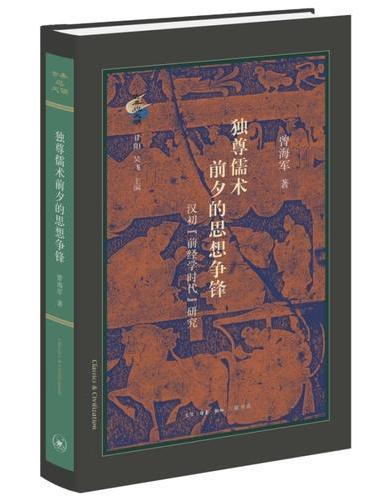
《
古典与文明·独尊儒术前夕的思想争锋:汉初“前经学时代”研究
》
售價:HK$
99.0

《
史记 全六册
》
售價:HK$
437.8
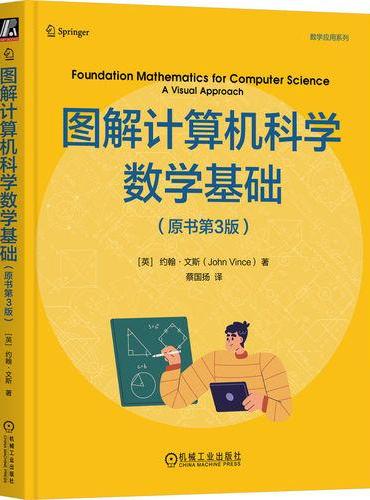
《
图解计算机科学数学基础(原书第3版)
》
售價:HK$
130.9
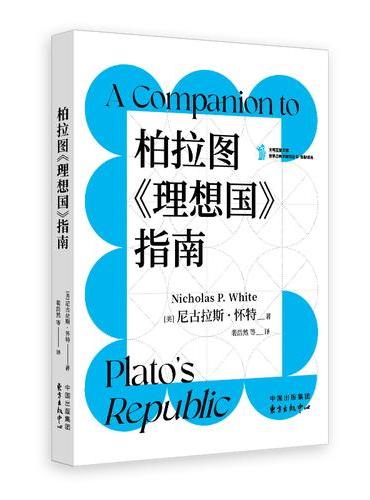
《
柏拉图《理想国》指南(想读《理想国》,一直看不懂?这本书就是你的哲学通关攻略)
》
售價:HK$
87.8

《
你的代谢还好吗:控制“五高”饮食运动法
》
售價:HK$
54.8
|
| 內容簡介: |
本书研究了汉英、汉德双语者双语句法的表征和处理机制,是国内第一部研究双语句法表征和处理的著作。
本书研究视角独特,方法新颖,研究发现对句法表征和处理等相关理论有贡献。本书对心理语言学、二语习得、外语教学等领域的研究者和博士、硕士研究生有参考价值。
|
| 目錄:
|
Acknowledgements
Abstract
摘 要
ABBREVIATIONS
Chapter 1
Introduction
1.1 Orientation of the Research
1.2 Rationale and Research Questions
1.3 Definition of Key Terms
1.3.1 Bilingual and Bilingualism
1.3.2 Priming and Syntactic Priming
1.4 Organization of the Book
Chapter 2
Syntactic Priming
2.1 Syntactic Priming in Spontaneous Language
2.2 Experimental Studies on Syntactic Priming
2.3 Bilingual Syntactic Priming
2.4 Techniques in Syntactic Priming Exploration
2.4.1 Behavioural Techniques
2.4.2 Computer Simulation
2.4.3 Brain Imaging Techniques
2.4.4 Corpus-based Techniques
2.5 Summary
Chapter 3
Mechanisms of Syntactic Representation and Processing
3.1 A Blueprint of Speech Production Levelt, 1989, 1999a
3.2 Lexical Access in Speech Production
3.3 Lexical Access in Bilingual Speech Production
3.4 Grammatical Encoding
3.5 Mechanisms of Syntactic Priming
3.5.1 Syntactic Priming is not Affected by Lexical, Prosodic and
Semantic Factors
3.5.2 Implicit Learning Account
3.5.3 Transient Activation Account
3.5.4 Mechanisms of Syntactic Priming across Languages
3.5.5 Interactive Alignment Account
3.5.6 Critiques
3.6 Grammatical Encoding in Syntactic Priming
3.6.1 The Two-stage Account
3.6.2 The One-stage Account
3.6.3 Critiques
3.7 Summary
Chapter 4
Bilingual Syntactic Representation
4.1 Introduction
4.2 Active and Passive Constructions
4.3 Experiment 1
4.3.1 Participants
4.3.2 Research Design
4.3.3 Materials
4.3.4 Scoring and Data Analysis
4.3.5 Results
4.4 Experiment 2
4.4.1 Participants
4.4.2 Research Design
4.4.3 Materials
4.4.4 Scoring and Data Analysis
4.4.5 Results
4.5 Experiment 3
4.5.1 Participants
4.5.2 Research Design
4.5.3 Materials
4.5.4 Scoring and Data Analysis
4.5.5 Results
4.6 Discussion
4.6.1 Explaining the within-Chinese Experiment
4.6.2 Partial Integration Account
4.6.3 L1 Dominance Account
4.7 Summary
Chapter 5
Syntactic Priming Increases while L2 Proficiency Develops
5.1 Introduction
5.2 DO and PO Constructions
5.3 Validating the C-Test as Measure of L2 Proficiency
5.3.1 Participants
5.3.2 Instruments
5.3.3 Results and Discussion
5.4 Experiment 4
5.4.1 Participants
5.4.2 Research Design
5.4.3 Procedure
5.4.4 Scoring and Data Analysis
5.4.5 Results
5.5 Experiment 5
5.5.1 Participants.
5.5.2 Research Design
5.5.3 Materials.
5.5.4 Scoring and Data Analysis
5.5.5 Results
5.6 Discussion
5.7 Summary
Chapter 6
Implicit Learning or Transient Activation?
6.1 Introduction
6.2 Experiment 6
6.2.1 Participants
6.2.2 Research Design and Research Hypothesis
6.2.3 Procedure
6.2.4 Scoring and Data Analysis
6.2.5 Results
6.3 Discussion
6.4 Summary
Chapter 7
Role of Word Order in Sentence Production
7.1 Introduction
7.2 Experiment 7
7.2.1 Participants
7.2.2 Research Design
7.2.3 Materials
7.2.4 Scoring and Data Analysis
7.2.5 Results
7.3 Experiment 8
7.3.1 Participants
7.3.2 Research Design
7.3.3 Materials
7.3.4 Scoring and Data Analysis
7.3.5 Results
7.4 Discussion
7.5 Summary
Chapter 8
Conclusions and Implications
8.1 Major Findings
8.1.1 Bilingual Syntactic Representation
8.1.2 Development of Bilingual Syntactic Representation
8.1.3 Mechanisms of Cross-linguistic Syntactic Priming
8.1.4 Grammatical Encoding in Bilingual Syntactic Processing
8.1.5 Summary
8.2 Implications
8.3 Limitations and Future Research
References
Appendices
Appendix I
Chinese Active Primes Used in Experiments 1, 3, 5 and 7
Chinese Passive Primes Used in Experiments 1, 3, 5 and 7
Chinese Baseline Primes Used in Experiments 1, 3, 5 and 7
Appendix II
English Active Primes Used in Experiment 2
English Passive Primes Used in Experiment 2
English Baseline Primes Used in Experiment 2
Appendix III
Chinese Training Stems Used in Experiment 4
DO Training Stems
PO Training Stems
Chinese Prime Stems Used in Experiment 4
DO Prime Stems
PO Prime Stems
English Target Stems Used in Experiment 4
Appendix IV
Materials Used in Experiment 6
Chinese Training Stems under the Same Verbs Condition
DO Training Stems
PO Training Stems
Chinese Training Stems under the Different Verbs Condition
DO Training Stems
PO Training Stems
Chinese Prime Stems
DO Prime Stems
PO Prime Stems
English Target Stems
Appendix V
German Active Primes Used in Experiment 8
German Passive Primes Used in Experiment 8
German Baseline Primes Used in Experiment 8
Appendix VI
The C-Test Battery
|
|

 購物車/收銀台(0) | 在線留言板
| 付款方式
| 運費計算
| 聯絡我們
| 幫助中心 |
加入書簽
購物車/收銀台(0) | 在線留言板
| 付款方式
| 運費計算
| 聯絡我們
| 幫助中心 |
加入書簽 HOME
HOME 新書上架
新書上架 暢銷書架
暢銷書架

