新書推薦:

《
初老的身体:更年期新规则指南(第2版)
》
售價:HK$
140.8

《
摘星星的人
》
售價:HK$
47.1

《
名侦探的守则(东野圭吾:反套路!玩梗诡计,吐槽套路,爆笑推理!“你怎么看出我男扮女装的?”)
》
售價:HK$
64.9

《
金融帝国:美元如何计算全球
》
售價:HK$
74.8

《
全球化时代的历史书写:七位欧美历史学家访谈录 尔文智识生活系列
》
售價:HK$
107.8

《
好能量
》
售價:HK$
97.9

《
心灵银行手账 : 创造真正改变的卓越系统 世界级催眠大师约翰·卡帕斯博士上世纪90年代收费75万美金
》
售價:HK$
74.8

《
档案中的虚构:16世纪法国的赦罪故事及故事的讲述者(人类学与新文化史研究经典力作)
》
售價:HK$
74.8
|
| 編輯推薦: |
|
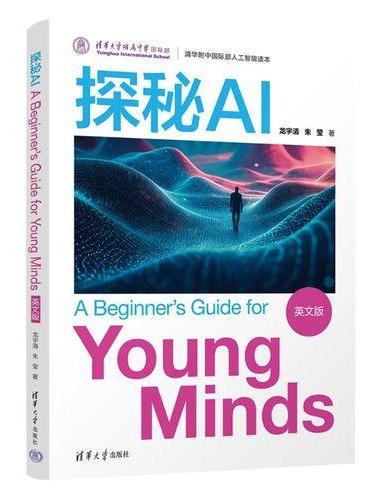
推开AI未来之门,从“直觉认知”到“责任创想”!这不仅是入门指南,更是青少年探索智能时代的“思维罗盘”。本书以“零基础降维”革命性写法,将抽象技术转化为可触摸的认知地图。
|
| 內容簡介: |
|
本书契合青少年认知特点,呼应新课标“学科融合+素养培育”导向。本书力求在知识架构清晰的前提下,使用最新、最生动的示例和化繁为简的比喻来带领中学生从直觉上理解AI,清晰梳理AI技术历史与发展的脉络,畅想AI带来的新机遇和挑战。在每个章节的最后,扩展阅读或帮助学生了解技术背后的趣事、或给学生展示AI应用的趣味用法、或引导学生思考技术发展的瓶颈。AI作为一门新兴技术,很多推动其发展的关键人物依然活跃,他们的故事、观点、辩论都将激励这一代学生不断探索!
|
| 關於作者: |
|
龙宇清,清华附中国际部人工智能委员会负责人,清华大中小人工智能通识教育体系研究项目组高级讲师,联合国教科文组织下属国际人工智能研究中心实践研究员。他在英国牛津大学获得统计科学学位,随后回国加入清华附中国际部,拥有丰富的高中及大学早期内容教学经验。主要研究兴趣为AI通识教育,AI、数学学科交叉教学实践。
|
| 目錄:
|
目 录
CONTENTS
Chapter 1Into the World of AI 1
Chapter 2 From Grammar to Large Language Models 13
Chapter 3 The Path to AI 17
3.1 The Rise of Human Intelligence 17
3.2 Mechanical Excellence 19
3.3 A Brief History of Mathematical Logic 22
3.4 The Birth of Computers 27
3.5 The Birth of AI 31
3.6 20th–21st Century AI: 3 Booms and 2 Winters 36
3.7 AI Ethics 42
Chapter 4 AI Fundamentals 47
4.1 What is AI and What is Not AI 47
4.2 Knowledge-based AI 50
4.3 Learning-based AI 54
4.4 Key Steps in Machine Learning 62
4.5 Learning Methods 73
4.6 Learning Strategies 78
Chapter 5 Introduction to Artificial Neural Networks 89
5.1 The Human Nervous System 89
5.2 Artificial Neuron and Neural Network 92
5.3 Deep Neural Network 98
5.4 Convolutional Neural Network 106
5.5 Recurrent Neural Network 110
5.6 Auto-Encoders and Generative Models 115
5.7 Transformers 121
Chapter 6
Understanding Language:
The Key to Intelligence 127
6.1 Language and Intelligence 127
6.2 The Origins of Computational Linguistics 130
6.3 Statistical Language Models 134
6.4 Word Embeddings 139
6.5 Deep Neural Network Language Models:
From RNNs to Transformers 143
6.6 From Text-Only to MultimodalAI 149
Chapter 7 Perception—How AI Feels the World 155
7.1 Introduction 155
7.2 Computer Vision: Teaching Machines to See 157
7.3 Audio Processing: Teaching Machines to Hear 167
7.4 Tactile and Other Sensory Perception 175
7.5 Active Perception and Embodied AI 180
7.6 Challenges, Ethical Considerations, and Future 184
Chapter 8 Intro to Applications of AI 193
8.1 Introduction to AI Applications 193
8.2 AI in Content Creation 198
8.3 AI in Design and Creativity 206
8.4 AI in Synthetic Media 210
8.5 AI in Decision Support Systems 215
8.6 AI in Strategic Planning 221
Chapter 9 AI for Science 227
9.1 AI4S: Aiding and Accelerating Scientific Discoveries 227
9.2 AI for Astronomy 230
9.3 AI for Medicine 234
9.4 AI for Environmental Science 239
9.5 AI for Mathematics 243
9.6 AI for Natural Sciences 249
9.7 AI for Social Science 253
9.8 AI for Neuroscience 260
Chapter 10 AI for Social Good 265
10.1 Introduction to AI for Social Good (AI4SG) 265
10.2 Smart Urban Planning 270
10.3 AI in Logistics and Supply Chain 275
10.4 Public Safety and Humanitarian Aid 279
10.5 Future Directions for AI4SG 283
10.6 Using AI to Make a Real Difference 285
References 291
|
| 內容試閱:
|
内? 容? 简? 介
本书为中学生量身打造,紧密贴合青少年认知发展特点,积极响应“学科融合 + 素养培育”的
改革方向,致力于为青少年构建 AI 认知的完整框架。全书以清晰的知识脉络为基础,通过生活化
的新颖案例、直观易懂的类比,将复杂的 AI 原理转化为青少年可感知、可理解的内容,帮助学生
建立对人工智能的科学认知。
内容上,本书既系统梳理 AI 技术的历史演进与关键突破,又聚焦当下前沿进展,更展望智能
时代的机遇与挑战——从图灵测试到深度学习,从 AlphaGo 到生成式 AI,引领青少年全面理解“AI
如何改变世界”。此外,AI 作为仍在快速迭代的新兴学科,许多推动其发展的核心人物仍活跃在科
研一线。书中融入这些科学家的成长经历、学术思想与未来洞见,旨在以真实的人物故事激发青少
年的探索热情,培养他们面对技术变革的批判性思维与创新精神。
本书不仅是一本 AI 入门指南,更是一把打开未来世界的钥匙,助力青少年在智能时代成为懂
技术、会思考、有担当的新一代学习者。
本书封面贴有清华大学出版社防伪标签,无标签者不得销售。
版权所有,侵权必究。举报:010-62782989,beiqinquan@tup.tsinghua.edu.cn。
? ? 图书在版编目(CIP)数据
? ? 探秘AI = A Beginner’s Guide for Young Minds:
英文 / 龙宇清,朱莹著. --北京:清华大学出版社,
2025. 9. -- ISBN 978-7-302-70092-0
? ? Ⅰ. G634.671
? ? 中国国家版本馆 CIP 数据核字第 2025X6Y078 号
责任编辑:刘芯艾
封面设计:傅瑞学
责任校对:赵琳爽
责任印制:杨? 艳
出版发行:清华大学出版社
网?? 址:https://www.tup.com.cn,https://www.wqxuetang.com
地?? 址:北京清华大学学研大厦 A 座 邮?? 编:100084
社? 总? 机:010-83470000 邮?? 购:010-62786544
投稿与读者服务:010-62776969, c-service@tup.tsinghua.edu.cn
质量反馈:010-62772015, zhiliang@tup.tsinghua.edu.cn
印? 装? 者:三河市龙大印装有限公司
经?? 销:全国新华书店
开?? 本:185mm×260mm? ? ? 印?? 张:19.75 字?? 数:442 千字
版?? 次:2025 年 9 月第 1 版 印?? 次:2025 年 9 月第 1 次印刷
定?? 价:138.00 元
产品编号:113959-01
编 委 会
顾 问:于涛
编 委:Noor A. Lucinian John C. G. Weil
插画组长:Isabella Yin
插 画 师:Cecilia Nianni Liu Zhi Fei Tong Zhi Ling Tong
序 言
FOREWORD
人工智能的重要性,已经不需要讨论了,关键是怎么办。尤其是对于清
华大学附属中学(以下简称清华附中)这样的学校,必须进行敏锐而坚决的
研判。在今年初,我们选拔了部分教师成立了“AI 19”未来教育训练营,借
助清华大学的资源支持,已经探索了一些道路,积累了一些经验。接下来,
我们就是要全力以赴让人工智能成为学生的必修课。我很高兴清华附中国际
部能够出版这样一本面向中学生的英文通识读本。
我看完全书,感到它的可贵之处在于它是从中学生的角度撰写的,没有
把人工智能写得深奥复杂,而是以丰富多样的案例进行生动的讲解,编写团
队采用了通俗易懂的语言和生动的比喻,将复杂的人工智能概念和原理讲解
得清晰明了。书中还引入了虚拟人物形象,通过对话式的探讨将重难点概念
解析清楚,再加上由学生绘制的图片,使阅读过程不再枯燥乏味。例如,在
介绍机器学习方法的发展历程时,书中用“教羊驼学英语”的比喻,将复杂
的符号主义、统计方法和连接学派转化为简单易懂的学外语的不同方式,让
读者在轻松愉快的阅读中掌握了知识。这种生动有趣的表达方式,不仅降低
了人工智能的学习门槛,还能够激发读者对这一领域的兴趣和探索欲望。
更为难能可贵的是,该书对人工智能伦理的深刻探讨,是全书最具有责
任感的部分,也是未来中学生所必备的素养。包括人工智能在内的现代科技,
天生具有双刃剑的特征,而没有良好伦理素养的人很难将其善用。从算法偏
见到数据隐私,从自动化带来的就业挑战到人工智能的决策责任,这些问题
都直接关系到人工智能技术的可持续发展和社会公平正义。本书不仅在多个
章节中深入探讨了这些伦理问题,还通过具体的案例分析,引导中学生思考
如何在技术应用中平衡创新与伦理的边界。因此,我要为编写团队点赞,这
是一个有使命感的团队,没有为“赶时髦”搞些拼凑的东西,而是把对未来
的忧患以及前瞻性的思考,融入内容的编排上。
有了好的内容,编写团队并没有忽视形式。本书高度重视互动性,这是
其一大特色。在传统的技术读本中,读者往往处于被动接收信息的地位,而
本书通过精心设计的辩论、思想实验和项目,让读者可以在实践中学习人工
探秘 AI A Beginner‘s Guide for Young Minds(英文版)
智能的基本原理和应用,鼓励读者积极参与到学习过程中。这些互动环节不仅能够帮助读
者更好地理解和消化书中的内容,还能够激发他们的创造力和批判性思维。例如,在涉及
贝叶斯统计学习模型时,书中设计了一个“投掷 20 次硬币,有 19 次都是正面朝上”的讨
论活动,让读者考虑不同的可能性,从不同的角度分析问题,并提出自己的见解,以理解
频率学派和贝叶斯学派不同的思考方式。这种互动性的设计,使学习过程变得更加生动有
趣,也让读者能够在这个过程中培养出独立思考的能力。这种案例驱动的教学方式,使抽
象的人工智能技术变得触手可及,让读者能够在具体的场景中理解技术的原理和价值,极
大地增强了学习的趣味性和实用性。
这样一本好书能够顺利出版,和清华附中国际部给自己设定的追求以及对自己提出的
要求分不开。朱莹老师和她的同事们已经注意到人工智能发展趋势对世界的深刻影响,但
他们没有坐等,而是主动编写了这本书,惠及更广大的中学生群体。
师者,所以传道授业解惑也。今天正好是中国的第 41 个教师节,我希望他们能继续
努力,做出更多的贡献。
清华附中校长 方妍
2025 年 9 月 10 日
IV
Into the World of AI 1
From Grammar to Large Language Models 13
The Path to AI 17
AI Fundamentals 47
3.1 The Rise of Human Intelligence 17
3.2 Mechanical Excellence 19
3.3 A Brief History of Mathematical Logic 22
3.4 The Birth of Computers 27
3.5 The Birth of AI 31
3.6 20th–21st Century AI: 3 Booms and 2 Winters 36
3.7 AI Ethics 42
4.1 What is AI and What is Not AI 47
4.2 Knowledge-based AI 50
4.3 Learning-based AI 54
4.4 Key Steps in Machine Learning 62
4.5 Learning Methods 73
4.6 Learning Strategies 78
Chapter 1
Chapter 2
Chapter 3
Chapter 4
Introduction to Artificial Neural Networks 89
5.1 The Human Nervous System 89
5.2? Artificial Neuron and Neural Network 92
5.3? Deep Neural Network 98
5.4? Convolutional Neural Network 106
5.5? Recurrent Neural Network 110
5.6 Auto-Encoders and Generative Models 115
5.7 Transformers 121
Chapter 5
目 录
VI
探秘 AI A Beginner’s Guide for Young Minds(英文版)
Understanding Language: The Key to Intelligence 127
Perception—How AI Feels the World 155
Intro to Applications of AI 193
AI for Science 227
AI for Social Good 265
291
6.1 Language and Intelligence 127
6.2 The Origins of Computational Linguistics 130
6.3 Statistical Language Models 134
6.4 Word Embeddings 139
6.5? Deep Neural Network Language Models: From RNNs to
Transformers 143
6.6 From Text-Only to Multimodal AI 149
7.1 Introduction 155
7.2 Computer Vision: Teaching Machines to See 157
7.3 Audio Processing: Teaching Machines to Hear 167
7.4 Tactile and Other Sensory Perception 175
7.5 Active Perception and Embodied AI 180
7.6 Challenges, Ethical Considerations, and Future 184
8.1 Introduction to AI Applications 193
8.2 AI in Content Creation 198
8.3 AI in Design and Creativity 206
8.4 AI in Synthetic Media 210
8.5 AI in Decision Support Systems 215
8.6 AI in Strategic Planning 221
9.1? AI4S: Aiding and Accelerating Scientific Discoveries 227
9.2 AI for Astronomy 230
9.3 AI for Medicine 234
9.4 AI for Environmental Science 239
9.5 AI for Mathematics 243
9.6 AI for Natural Sciences 249
9.7 AI for Social Science 253
9.8 AI for Neuroscience 260
10.1 Introduction to AI for Social Good (AI4SG) 265
10.2 Smart Urban Planning 270
10.3 AI in Logistics and Supply Chain 275
10.4 Public Safety and Humanitarian Aid 279
10.5 Future Directions for AI4SG 283
10.6? Using AI to Make a Real Difference 285
Chapter 6
Chapter 7
Chapter 8
Chapter 9
Chapter 10
References
1
1 Into the World of AI
Learning Objectives
1. Recognize the presence of AI in everyday life.
2. Understand the core concept of artificial intelligence as the
use of computers to simulate human intelligent behaviors, like
decision-making, creativity, and perception.
3. Explore the range of AI applications from two perspectives:
AI+ and +AI.
4. Recognize the role ofAI as the enabling technology of the 21st
century.
Think about your day.
You’re getting ready for school and ask your smart speaker, “What’s the weather like
today?” It answers in a natural, friendly voice and even suggests you take an umbrella. On the
way to school, you have to rush to catch the subway, and an update appears on your phone asking
if you’d like to start a workout. These aren’t just convenient (or inconvenient, as the case may
be). That’s a system that’s thinking for you.
Later, you’re typing an essay, and the app underlines a sentence in yellow: “Consider
rephrasing for clarity.” Or you’re watching videos, and the next video isn’t random: the app just
knows what you’ll want to watch next, even if you didn’t know it yourself. Behind the scenes,
these tools are borrowing a bit of “smarts” to help you out.
These may feel like very different kinds of experiences: one where a system is doing
something for you, and another where a tool is using intelligence to assist you in what you were
already doing. But both are powered by Artificial Intelligence. And both are already part of your
everyday life.
So when we talk about AI, don’t think of it as something fictional, in a lab or a robot. It’s
already here. You’ve probably used it five times before lunch.
Artificial Intelligence
While the idea of artificial intelligence has been around since ancient times, from
|
|

 購物車/收銀台(0) | 在線留言板
| 付款方式
| 運費計算
| 聯絡我們
| 幫助中心 |
加入書簽
購物車/收銀台(0) | 在線留言板
| 付款方式
| 運費計算
| 聯絡我們
| 幫助中心 |
加入書簽 HOME
HOME 新書上架
新書上架 暢銷書架
暢銷書架