新書推薦:

《
数学老师没教过的数学
》
售價:HK$
46.2

《
法国在乍得的战争:在非洲的军事干预与非殖民化
》
售價:HK$
107.8

《
西学东渐记(插图本)
》
售價:HK$
85.8
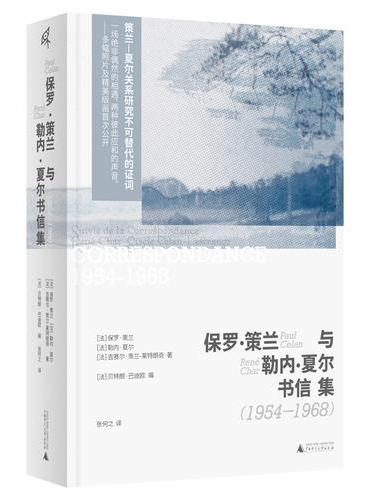
《
新民说·保罗·策兰与勒内·夏尔书信集(1954—1968
》
售價:HK$
75.9

《
大历史学家——世界100位著名历史学家画传
》
售價:HK$
162.8

《
欧洲私法:1800-1914
》
售價:HK$
327.8

《
教琴日记
》
售價:HK$
66.0

《
西方国家安全理论演进
》
售價:HK$
85.8
|
| 內容簡介: |
|
本书是微电子与集成电路设计相关技术的专业英语教材,紧扣基本概念、基本理论和分析方法。全书共27讲,分为4部分:半导体物理基础,主要内容包括半导体概述、晶体结构、能带模型、平衡半导体、载流子输运、半导体中的非平衡过剩载流子;半导体器件,主要内容包括pn结、金属-半导体接触、异质结、双极晶体管、现代双极晶体管结构、MOSFET基础、MOSFET的非理想效应、先进的MOSFET器件;集成电路设计,主要内容包括集成电路简介、模拟集成电路设计、数字集成电路设计、半导体存储器、射频集成电路设计、仿真与验证;半导体技术与工艺,主要内容包括:半导体技术简介、双极技术和砷化镓数字逻辑工艺、CMOS工艺、可靠性等。本书提供两个附录半导体微波与功率器件和超越摩尔定律,可扫描书中二维码拓展阅读;配套电子课件、习题参考答案、部分课文录音、英文阅读材料译文等,请登录华信教育资源网注册下载。本书既可作为高等学校微电子、集成电路、电子及相关专业高年级本科生和研究生相关课程的教材,也可作为职业本科和高职高专相关课程的教材,还可供集成电路领域相关科研工作者和工程技术人员学习参考。
|
| 關於作者: |
|
李聪,博士、副教授、博士生导师,主要研究方向为新型半导体器件及电路研究。2008年在芬兰奥卢(oulu)大学访问研究,2011 年在欧洲微电子中心(IMEC)访问研究。2015年-2016年在美国佛罗里达大学(UF)访问研究。主持国家自然科学基金两项,参与多项国防科研项目,发表论文30余篇,专利5个。
|
| 目錄:
|
目 录
Session 1 Introduction to Semiconductor1
1.1 What Is Semiconductor1
1.2 Classification of Semiconductor3
Reading Materials3
Session 2 Crystal Structure9
2.1 Primitive Cell and Crystal Plane9
2.2 Atomic Bonding11
Reading Materials12
Session 3 Band Model17
3.1 Introduction to Quantum Mechanics17
3.1.1 The Principle of Energy Quanta17
3.1.2 Schrodinger’s Wave Equation18
3.2 Band18
3.3 Effective Mass Theory19
Reading Materials20
Session 4 The Semiconductor in
Equilibrium23
4.1 Charge Carriers in Semiconductor23
4.2 Intrinsic Semiconductor25
4.3 Extrinsic Semiconductor26
Reading Materials28
Session 5 Carrier Transport32
5.1 Overview of Carrier Transport32
5.2 Low Field Transport33
5.2.1 Mobility33
5.2.2 Microscopic Scattering Processes34
5.3 High Field Transport35
5.4 Diffusion Current36
Reading Materials38
Session 6 Nonequilibrium Excess Carriers
in Semiconductor42
6.1 Recombination42
6.1.1 Band to Band Recombination42
6.1.2 Free-Exciton Recombination43
6.1.3 Auger Recombination43
6.1.4 Band-Impurity Recombination43
6.1.5 Surface Recombination44
6.2 Minority Carrier Lifetime44
6.3 Ambipolar Transport45
Reading Materials46
Session 7 The pn Junction (Ⅰ)49
7.1 Introduction49
7.2 Basic Structure of the pn Junction49
7.3 Energy Band Diagram for a pn
Junction50
7.4 Ideal Current-Voltage Relationship51
7.5 Characteristics of a Practical Diode51
Reading Materials52
Session 8 The pn Junction(Ⅱ)57
8.1 Breakdown in pn Junction57
8.2 Small-Signal Diffusion Resistance
of the pn Junction57
8.3 Junction Capacitance58
8.4 Diffusion or Storage Capacitance59
8.5 Diode Transients60
8.6 Circuit Models for Junction Diodes60
Reading Materials61
Session 9 Metal-Semiconductor
Contacts65
9.1 Schottky Contacts65
9.1.1 Schottky Contacts in Equilibrium66
9.1.2 Schottky Contacts under Applied
Bias68
9.2 Ohmic Contacts70
Reading Materials72
Session 10 Heterojunctions75
10.1 Strain and Stress at Heterointerfaces75
10.2 Heterojunction Materials76
10.3 Energy-Band Diagram78
Reading Materials79
Session 11 The Bipolar Junction
Transistor (Ⅰ)82
11.1 The Bipolar Junction Transistor Construction82
11.2 Transistor Action82
11.3 Nonideal Effects83
11.4 Base Resistance85
Reading Materials86
Session 12 The Bipolar Junction
Transistor (Ⅱ)90
12.1 Breakdown Voltage90
12.2 Frequency Limits of BJT91
12.3 The Schottky-Clamped Transistor92
12.4 Small-Signal Transistor Model93
Reading Materials94
Session 13 Modern BJT Structures97
13.1 Introduction97
13.2 Deep-Trench Isolation97
13.3 Polysilicon Emitter98
13.4 Self-Aligned Polysilicon Base
Contact98
13.5 Pedestal Collector98
13.6 SiGe-Base99
Reading Materials99
Session 14 Basics of MOSFETs104
14.1 Introduction104
14.2 General Characteristics of a
MOSFET104
14.3 MOS System105
14.4 Work Function Differences106
14.5 Flat-Band Voltage106
14.6 Threshold Voltage107
Reading Materials107
Session 15 Nonideal Effects of
MOSFETs111
15.1 Introduction111
15.2 Effective Mobility111
15.3 Velocity Saturation111
15.4 Channel-Length Modulation112
15.5 DIBL112
15.6 Hot-Carrier Effect113
15.7 GIDL114
Reading Materials114
Session 16 Advanced MOSFET
Devices118
16.1 Introduction118
16.2 Channel Doping Profile118
16.3 Gate Stack118
16.4 Source/Drain Design119
16.5 Schottky-Barrier Source/Drain120
16.6 Raised Source/Drain120
16.7 SOI121
16.8 Three Dimensional Structure121
Reading Materials122
Session 17 Introduction to Integrated
Circuits127
17.1 Introduction127
17.2 Size and Complexity of Integrated Circuits128
17.3 Semiconductor Device for Integrated Circuits129
17.4 IC Design Process131
Reading Materials132
Session 18 Analog Integrated Circuits
Design138
18.1 Introduction138
18.2 Analog Signal Processing140
18.3 CMOS Technology141
18.4 Amplifiers141
18.5 Differential Amplifiers142
18.6 Operational Amplifiers143
18.7 Characterization of Op Amps144
Reading Materials145
Session 19 Digital Integrated Circuits
Design149
19.1 Introduction149
19.2 The Static CMOS Inverter149
19.2.1 Switching Threshold150
19.2.2 Noise Margins150
19.2.3 Performance of CMOS Inverter:
The Dynamic Behavior151
19.3 Designing Combinational Logic
Gates in CMOS153
19.3.1 Static CMOS Design153
19.3.2 Dynamic CMOS Design156
Reading Materials157
Session 20 Semiconductor Memories162
20.1 Introduction162
20.2 SRAM163
20.3 DRAM164
20.4 Flash Memories165
Reading Materials167
Session 21 Radio Frequency Integrated Circuits Design172
21.1 Introduction172
21.2 RF System Performance Metrics173
21.3 RF Transceiver Architectures174
21.4 RF Passive Component174
21.5 Low-Noise Amplifier175
21.6 Frequency Synthesizer176
21.7 Transmitter177
21.7.1 Up conversion versus Downconversion177
21.7.2 Mixer178
21.7.3 RF PA (Power Amplifier)178
Reading Materials179
Session 22 Simulation and Verification186
22.1 Introduction186
22.2 SPICE Circuit Simulator186
22.2.1 SPICE Models186
22.2.2 Circuit Simulation188
22.3 Circuit Design Automation with
Verilog189
22.3.1 Digital Design Flow189
22.3.2 Verilog HDL190
22.4 Verification191
Reading Materials192
Session 23 Introduction to the Semiconductor
Technology (Ⅰ)196
23.1 The Development of Semiconductor Technology196
23.2 Wafer Fabrication197
23.2.1 Wafer Preparation197
23.2.2 Oxidation198
23.2.3 Diffusion199
23.2.4 Ion Implantation199
23.2.5 Chemical-Vapor Deposition199
23.2.6 Metallization200
23.2.7 Photolithography200
23.2.8 Etching201
Reading Materials202
Session 24 Introduction to the Semiconductor Technology (Ⅱ)205
24.1 Assembly205
24.2 Metrology207
Reading Materials209
Session 25 Bipolar Technology and GaAs Digital Logic Process212
25.1 Bipolar Technology212
25.1.1 pn Junction Isolated Bipolar IC Technology212
25.1.2 Dielectrically Isolated Bipolar Technologies216
25.2 GaAs Digital Logic Process217
Reading Materials219
Session 26 CMOS Technology224
26.1 CMOS Fabrication Sequence224
26.2 Twin Well and Retrograde Well226
26.3 Isolation227
26.4 Structures that Reduce the
Drain Field227
26.5 Gate Engineering228
Reading Materials229
Session 27 Reliability235
27.1 Introduction235
27.2 Failure Modes237
Reading Materials241
ú 考 译 文
第1讲 半导体概述245
1.1 什么是半导体245
1.2 半导体的分类246
第2讲 晶体结构247
2.1 原胞和晶面247
2.2 原子价键249
第3讲 能带模型250
3.1 量子力学简介250
3.2 能带251
3.3 有效质量理论251
第4讲 平衡半导体252
4.1 半导体中的带电载流子252
4.2 本征半导体254
4.3 非本征半导体255
第5讲 载流子输运256
5.1 载流子输运概要256
5.2 低场输运258
5.3 强场输运260
5.4 扩散电流260
第6讲 半导体中的非平衡过剩载流子261
6.1 复合262
6.2 少数载流子寿命264
6.3 双极输运264
第7讲 pn结(Ⅰ)265
7.1 概述265
7.2 pn结的基本结构265
7.3 pn结的能带图266
7.4 理想电流-电
|
|

 購物車/收銀台(0) | 在線留言板
| 付款方式
| 運費計算
| 聯絡我們
| 幫助中心 |
加入書簽
購物車/收銀台(0) | 在線留言板
| 付款方式
| 運費計算
| 聯絡我們
| 幫助中心 |
加入書簽 HOME
HOME 新書上架
新書上架 暢銷書架
暢銷書架



