新書推薦:

《
存在与真理
》
售價:HK$
85.8

《
免疫的奥秘:病毒、健康与人类命运
》
售價:HK$
86.9

《
变形金刚:绝境逢生(普通版)(全新漫画合订本第三册,简中版全球同步上市!完整收录能量块宇宙2024年
》
售價:HK$
74.8

《
成事铁律
》
售價:HK$
61.6

《
大政府的国际起源:美国产业政策与制度变迁
》
售價:HK$
96.8
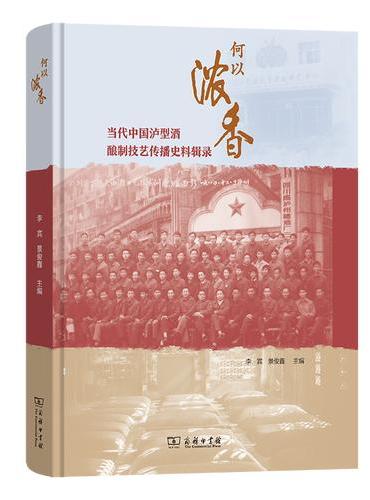
《
何以浓香——当代中国泸型酒酿制技艺传播史料辑录
》
售價:HK$
181.5

《
清末民国骈文批评转型研究
》
售價:HK$
82.5

《
中国汉江流域观赏植物资源图鉴
》
售價:HK$
217.8
|
| 內容簡介: |
|
The ring of symmetric functions A, with natural basis given by the Schur functions, arise in many different areas of mathematics. For example, as the cohomology ring of the grassmanian, and as the representation ring of the symmetric group. One may define a coproduct on A by the plethystic addition on alphabets. In this way the ring of symmetric functions becomes a Hopf algebra. The Littlewood-Richardson numbers may be viewed as the structure constants for the co-product in the Schur basis. The first part of this thesis, inspired by the umbral calculus of Gian-Carlo Rota, is a study of the co-algebra maps of A, The Macdonald polynomials are a somewhat mysterious qt-deformation of the Schur functions. The second part of this thesis contains a proof a generating function identity for the Macdonald polynomials which was originally conjectured by Kawanaka.
|
| 目錄:
|
1.Symmetric functions of Littlewood-Richardson type
1.1.Symmetric Functions
1.1.1.Partitions
1.1.2.Monomial syrmnetric functions
1.1.3.Plethystic notation
1.1.4.Schur functions
1.2.The Umbral Calculus
1.2.1.Coalgebras
1.2.2.Sequences of Binomial Type
1.3.The Hall inner-product
1.3.1.Preliminaries
1.3.2.Column operators
1.3.3.Duality
1.4.Littlewood-Richardson Bases
1.4.1.Generalized complete symmetric functions
1.4.2.Umbraloperators
1.4.3.Column operators
1.4.4.Generalized elementary symmetric functions
1.5.Examples
2.A generating function identity for Macdonald polynomials
2.1.Macdonald Polynomials
2.1.1 .Notation
2.1.2.Operator definition
2.1.3.Characterization using the inner product
2.1.4.Arms and legs
2.1.5.Duality
2.1.6.Kawanaka conjecture
2.2.Resultants
2.2.1.Residue calculations
2.3.Pieri formula and recurrence
2.3.1.Arms and legs again
2.3.2.Pieri formula
2.3.3.Recurrence
2.4.The Proof
2.4.1.The Schur case
2.4.2.Step one
2.4.3.Step two
2.4.4.Step three
References
编辑手记
|
|

 購物車/收銀台(0) | 在線留言板
| 付款方式
| 運費計算
| 聯絡我們
| 幫助中心 |
加入書簽
購物車/收銀台(0) | 在線留言板
| 付款方式
| 運費計算
| 聯絡我們
| 幫助中心 |
加入書簽 HOME
HOME 新書上架
新書上架 暢銷書架
暢銷書架



