新書推薦:

《
加密货币突破数字边界
》
售價:HK$
75.9

《
养元筑基调气血
》
售價:HK$
76.8
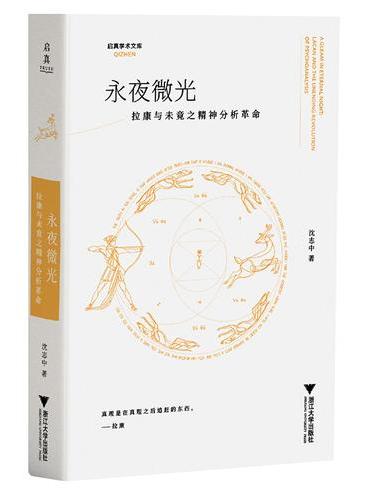
《
永夜微光:拉康与未竟之精神分析革命
》
售價:HK$
129.8
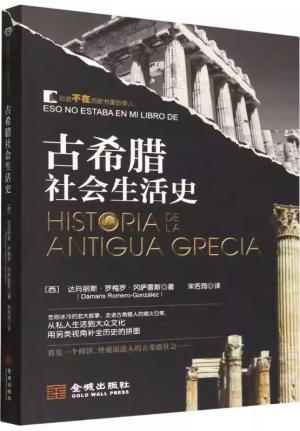
《
古希腊社会生活史
》
售價:HK$
54.8
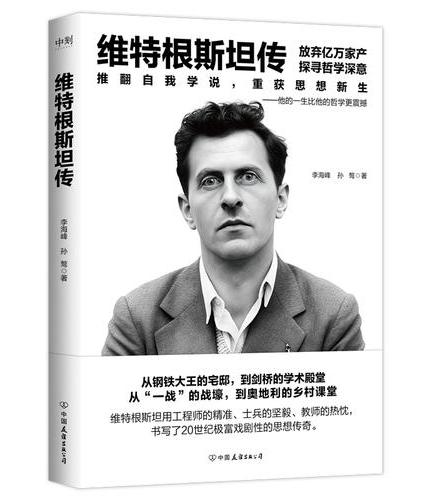
《
维特根斯坦传
》
售價:HK$
63.8

《
暮日耀光:张居正与明代中后期政局
》
售價:HK$
206.8
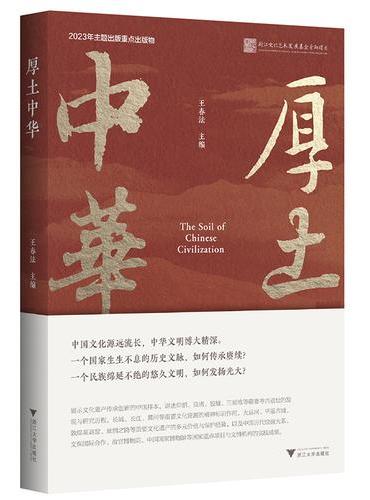
《
厚土中华
》
售價:HK$
107.8

《
镜头设计:电影、短剧与短视频的拍摄之道
》
售價:HK$
107.8
|
| 編輯推薦: |
|
兼顾学术性、专业性、实用性和前瞻性特点全球甄选,原版引进,国内独家的ESP学术精品中国专门用途英语专业委员会重点推荐参考书
|
| 內容簡介: |
本书作者Laura Gavioli是莫德纳和勒佐艾米利亚大学的教授,多年来致力于语料库在语言教学、翻译教学和专门用途英语教学中的应用方面的研究。本书探究了基于语料库的学习方式对ESP教学中二语习得的影响,全书共分七章:引言、语料库语言学和语言教学的背景概况、理论前提、语料库和专门用途英语的关系、教师如何指导学习者研究语料库和数据、学习者探索语料库的过程和语言产出结果,以及结论。本书内容聚焦语料库语言学和专门用途语言的结合点,探讨了数据驱动学习的理论前提,探索了学生自主学习的方法和可行性。结果表明,在教学中使用语料库数据分析的方法,可以引发有关语料库语言学从理论和实践两个角度对教学的意义进行讨论和反思。
本书对于语料库语言学和专门用途语言教学的教材设计者、应用语言学家、教师和学习者都具有很强的理论和实践指导意义。
|
| 目錄:
|
Acknowledgments ix
Key to abbreviations and acronyms xi
A note for the reader xi
CHAPTER 1
Introduction 1
1.1 Why this book? 1
1.2 Corpora and "models" of language
3
1.3 Why ESP settings? 5
1.4 The corpora in this book 6
1.4.1 Small corpora and specialized
corpora 6
1.4.2 Description of the corpora used
here.
1.5 A word about concordances and concordancing tools 11
1.6 Which learners? 12
1.7 How the book is organized 13
CHAPTER 2
Corpus linguistics and language teaching and learning: A background 17
2.1 Language corpora in language pedagogy: The 90s debate 17
2.1.1
Critical viewpoints 17
2.1.2 The contribution of corpus
analysis to language pedagogy 20
2.2 Corpus analysis as a tool for language teachers 22
2.2.1 Corpus analysis and syllabus
design 23
2.2.2 Supporting teachers
explanations 25
2.3 Corpus analysis as a tool for language learners 27
2.3.1 The Data-Drivrn Learning
approach 27
2.3.2 Question一:Should the teacher guide the
learners? 29
2.3.3 Question 2: Learners or
researchers? 30
2.3.4 Question 3:Is the result worth
the effort? 32
2.4 Conclusion 33
CHAPTER 3
Theoretical premises for teachers and learners
35
3.0 Introduction 35
3.t Learners looking at concordance data: What do they see? 36
3.2 Language as idiom vs. language as a logical system 41
3.3 The contribution of corpus work to a "new" idea
of language compositionality 42
3.3.1 The open-choice principle and
the idiom principle 43
3.3.2 The search for units of
meaning 44
3.3.3 "Unusuali丫and creativity 47
3.4 Learners, "idioms" and corpus work 49
3.5 Conclusion 50
CHAPTER 4
Corpus work, ESP and language learners
53
4.0 Introduction: From small to specialized corpora 53
4.t ESP and specialised corpora: A happy marriage 55
4.1.1 ESP, quantitative data and
corpus analysis:
A natural development 55
4.1.2 ESP and corpus work 56
4.2 Specialised language and specialized teaching purposes 60
4.3 The continuum between specialized and general corpora 63
4.3.1 Register variation across
genres句
4.3.2 Identifying specificity 65
4.4 Specialized language corpora and language learning 67
4.5 Conclusion 69
CHAPTER 5
Guiding the learners to work with corpora and corpus data 71
5.0 Introduction 71
5.1 Type of material: Samples vs. examples
72
5.1.1 Task I: Looking at the
concordance lines as samples 74
5.2 "What to look for" in a concordance: Recurrence and typicality 76
5.2.1 Task 2: Focusing the students''
attention
on recurrent patterns 79
5.3 Correlating output data and corpus texts
81
5.3.1 Task 3: Corpus data and corpus
content 82
5.3.2 Follow-up of Task 3: Leading
students to create corpora 84
5.4 Conclusion 85
CHAPTER 6
Learners exploring corpora to observe and produce texts:
Spies in action 87
6.o Introduction 87
6.1 Corpora and ESP learners: "Spies"
88
6.2 Using a small corpus of specialized texts to discover
technical concepts go
6.2.1 A medical word: The case of the
acronym "RIBA" 91
6.2.2 A word from economics: The case
of"bid" 94
6.2.3 Conclusion 98
6.3 From a single corpus to more corpora:
Comparing data 99
6.3.1 How specialized is a specialized
word?
The case of the word
"disorder.100
6.3.2 Exploring corpora in different
languages:
Contrasting English and Italian
data 104
6.4 Interacting with "the authorities":
Completing or contrasting
explanations from reference
materials and the teacher 109
6.4.1 The case of the progressive
tense in medical
research articles 110
6.5 Exploring corpora to produce texts
113
6.5.1 Translating a medical abstract
114
6.5.2 Writing out apolitical speech
118
6.6 Conclusion: From spies to "double-agents"? 123
CHAPTER 7
Concluding remarks 127
7.1 Three answers? 127
7.1.1 If learners are to behave as
data analysts, what should be
the role of the teacher? 127
7.1.2 Learners or researchers? 129
7.1.3 Is the effort a worthwhile
one? 131
7.a Corpus work and pedagogy: Old or new questions? 133
7.3 Future developments 134
7.3.1 Tools and teaching materials
135
7.3.2 Corpus-based dictionaries and
learners 136
7.3.3
Corpus work and teachin州learning skills 137
7.3.4 Serendipity 138
7.3.5 Understanding "deviance139
7.3.6 Recurrence, deviance and
language awareness 141
7.4 A concluding wish 142
APPENDIX 1 145
APPENDIX 2 147
APPENDIX 3 153
APPENDIX 4 157
APPENDIX 5 159
References 165
Index 175
|
|

 購物車/收銀台(0) | 在線留言板
| 付款方式
| 運費計算
| 聯絡我們
| 幫助中心 |
加入書簽
購物車/收銀台(0) | 在線留言板
| 付款方式
| 運費計算
| 聯絡我們
| 幫助中心 |
加入書簽 HOME
HOME 新書上架
新書上架 暢銷書架
暢銷書架

