新書推薦:

《
宋时飞花
》
售價:HK$
74.8
《
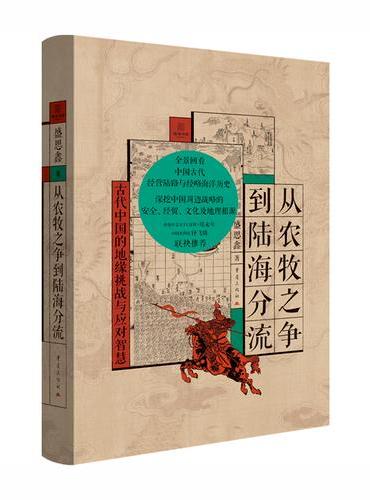
从农牧之争到陆海分流 陆海书系地缘政治
》
售價:HK$
74.8
《
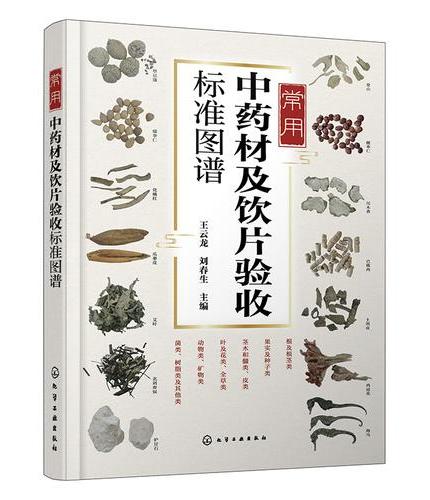
常用中药材及饮片验收标准图谱
》
售價:HK$
217.8
《
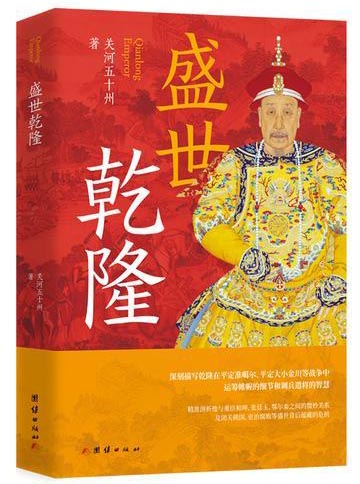
盛世乾隆
》
售價:HK$
85.8
《
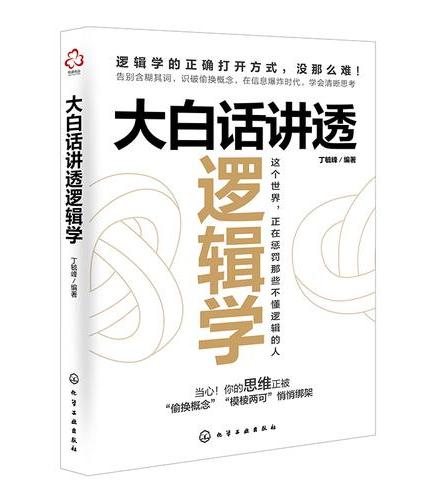
大白话讲透逻辑学
》
售價:HK$
57.2
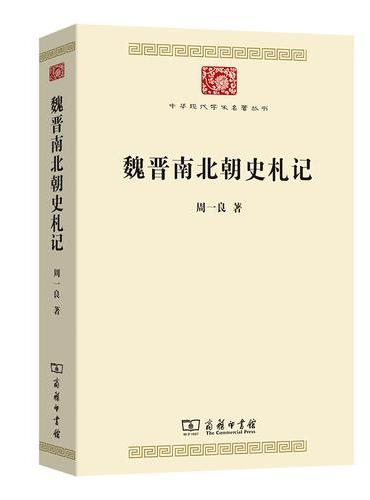
《
魏晋南北朝史札记
》
售價:HK$
107.8
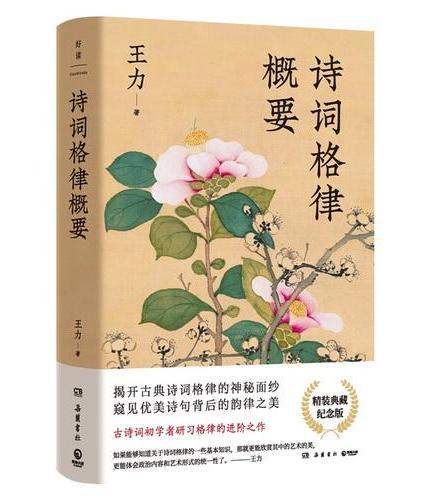
《
诗词格律概要:精装典藏纪念版(语言学大师王力写给古诗词初学者研习格律的进阶作)
》
售價:HK$
61.6
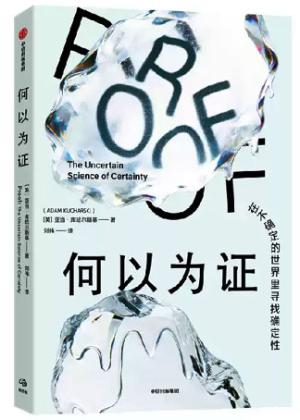
《
何以为证:在不确定的世界里寻找确定性
》
售價:HK$
75.9
|
| 內容簡介: |
Momentum Press is Proud to bring to you Chemical Sensors: Simulation and Modeling Volume 4: Opti cal Sensors,edited by Ghenadii Koroteenkov. This is the fourth of a new multi-volume comprehensive reference work that provides computer simulation and modeling techniques in various fields
of chemical sensing and the important applications for chemical sensing such as bulk and surfacc diffusion, adsorption, surface reactions, sintering, conductivity, mass transport, and interphasc interactions.
|
| 關於作者: |
Ghenadii Korotcenkov, received his Ph.D. in Physics and Technology of Semiconductor Materials and Devices in 1976, and his Habilitate Degree Dr.Sci. in Physics and Mathematics of Semiconductors and Dielectrics in 1990. For a long time he was a leader of the scientific Gas Sensor Group and manager of various national and international scientific and engineering projects carried out in the Laboratory of Micro- and Optoelectronics, Technical University of Moldova. Currently, Dr. Korotcenkov is a research professor at the Gwangju Institute of Science and Technology, Republic of Korea.
Specialists from the former Soviet Union know Dr. Korotcenkov''s research results in the field of study of Schottky barriers, MOS structures, native oxides, and photoreceivers based on Group IIIH-V compounds very well. His current research interests include materials science and surface science, focused on nanostructured metal oxides and solid-state gas sensor design. Dr. Korotcenkov is the author or editor of 11 books and special issues, 11 invited review papers, 17 book chapters, and more than 190 peer-reviewed articles. He holds 18 patents, and he has presented more than 200 reports at national and international conferences.
Dr. Korotcenkov''s research activities have been honored by an Award of the Supreme Council of Science and Advanced Technology of the Republic of Moldova 2004, The Prize of the Presidents of the Ukrainian, Belarus, and Moldovan Academies of Sciences 2003, Senior Research Excellence Awards from the Technical University of Moldova 2001, 2003, 2005, a fellowship from the International Research Exchange Board 1998, and the National Youth Prize of the Republic of Moldova 1980, among others.
|
| 目錄:
|
PREFACE
ABOUT THE EDITOR
CONTRIBUTORS
1 ATOMISTIC SIMULATION OF HIERARCHICAL NANOSTRUCTURED MATERIALS FOR OPTICAL CHEMICAL SENSING
1 Introduction
2 Hierarchical Nanomaterials: Construction and Organization Principles; Materials Construction by the Bottom-Up Principle
2.1 Hierarchical Nanomaterials for Nanophotonics and Their Sensing Potentialities
2.2 Space-Time Scale Hierarchy and the Structure of Nanomaterials for Nanophotonics
2.3 Structure of Nanomaterials for Optical Chemical Sensors: From a Molecule to a Supramolecular Center, Nanoparticle,and Nanomaterial
3 Hierarchy ofAtomistic Simulation Methods Corresponding to Scale Hierarchy
4 Atomistic Multiscale Simulation of Hierarchical Nanomaterials for Optical Chemical Sensors: Step by Step
4.1 Supramolecular Level: Calculations of Molecular Interactions between Gas-Phase Analyte Molecules and Simple Substrate Models
4.2 Supramolecular Level: DFT Calculations of the 9-Diphenylaminoacridine 9-DPAA Fluorescent Indicator and Its Interactions with Analyte Molecules
4.3 Multiscale Level: MDDFT Slab Modeling of the Adsorption of Simple Organic and Inorganic Molecules on an Amorphous Silica Surface
4.4 Multiscale Level: MDDFT Cluster Modeling of a 9-DPAA Silica RC and Its Interaction with Small Analyte Molecules
4.5 Multiscale Level: MDDFT Cluster Modeling of the Effect of Analyte Molecules on the Absorption and Fluorescence Spectra of a 9-DPAASilica RC
4.6 Multiscale Level: Modeling the Structure and Spectra of an RC Based on the Nile Red Dye Adsorbed on the Surface of Polystyrene
5 Prospects and Outlook
Acknowledgments
References
2 SELF-ASSEMBLING AND MODELING OF SENSING LAYERS: PHOTONIC CRYSTALS
1 Introduction
2 Photonic Crystals
3 Methods of Modeling Spontaneous Emission Modification
3.1 Correspondence Principle
3.2 Dipole Near a Surface
3.3 Modeling the Modification of Spontaneous Emission Based on the Finite-Difference Time-Domain Method
4 Conclusion
References
3 OPTICAL SENSING BY METAL OXIDE NANOSTRUCTURES: PHENOMENOLOGY AND BASIC PROPERTIES
1 Introduction
2 Optochemical Sensing by Oxide Materials: Methods Not Based on Photoluminescence
2.1 Approaches to Optical Sensing
2.2 Oxide-Based Optochemical Sensing Using Absorbance
Responses
4 SIMULATION AND MODELING OF HYDROGEN LEAK SENSORS BASED ON OPTICAL FIBER GRATINGS
5 SIMULATION AND MODELING OF SURFACE PLASMON RESONANCE-BASED FIBER OPTICAL SENSORS
INDEX
|
|

 購物車/收銀台(0) | 在線留言板
| 付款方式
| 運費計算
| 聯絡我們
| 幫助中心 |
加入書簽
購物車/收銀台(0) | 在線留言板
| 付款方式
| 運費計算
| 聯絡我們
| 幫助中心 |
加入書簽 HOME
HOME 新書上架
新書上架 暢銷書架
暢銷書架

