新書推薦:

《
在别处安家:关于逃离、生存与梦想破碎之地
》
售價:HK$
74.8

《
棉花王国 密西西比河流域的奴隶制与资本主义 (一部改写美国奴隶制认知的史学佳作)
》
售價:HK$
129.8

《
历史哲学 一部关于世界文明 理性与历史的终极思考
》
售價:HK$
108.9

《
诡舍6完结篇蔽日开天
》
售價:HK$
54.8
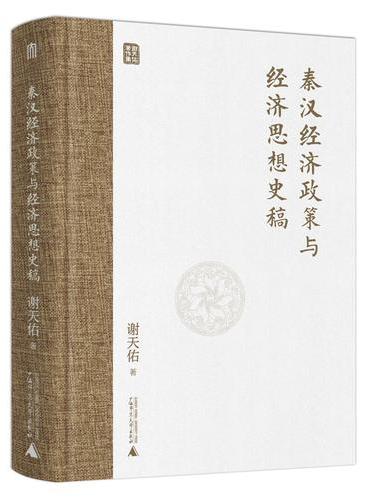
《
大学问·秦汉经济政策与经济思想史稿(jue版好书复活,读懂秦汉,就是读懂中国两千年的经济底色。)
》
售價:HK$
97.9

《
狄仁杰与武则天 武周革命与平民官僚的崛起 钤印版 汗青堂丛书163
》
售價:HK$
96.8

《
自恋主义文化
》
售價:HK$
85.8

《
我是异类,你是怪物
》
售價:HK$
64.9
|
| 內容簡介: |
|
This is the third of a new five-volume comprehensive reference work that provides computer simulation and modeling techniques in various fields of chemical sensing and the important applications for chemical sensing such as bulk and surface diffusion, adsorption, surface reactions, sintering, conductivity, mass transport, and interphase interactions.
|
| 關於作者: |
Ghenadii Korotcenkov, received his Ph.D. in Physics and Technology of Semiconductor Materials and Devices in 1976, and his Habilitate Degree Dr.Sci. in Physics and Mathematics of Semiconductors and Dielectrics in 1990. For a long time he was a leader of the scientific Gas Sensor Group and manager of various national and international scientific and engineering projects carried out in the Laboratory of Micro- and Optoelectronics, Technical University of Moldova. Currently, Dr. Korotcenkov is a research professor at the Gwangju Institute of Science and Technology, Republic of Korea.
Specialists from the former Soviet Union know Dr. Korotcenkov''s research results in the field of study of Schottky barriers, MOS structures, native oxides, and photoreceivers based on Group IIIH-V compounds very well. His current research interests include materials science and surface science, focused on nanostructured metal oxides and solid-state gas sensor design. Dr. Korotcenkov is the author or editor of 11 books and special issues, 11 invited review papers, 17 book chapters, and more than 190 peer-reviewed articles. He holds 18 patents, and he has presented more than 200 reports at national and international conferences.
Dr. Korotcenkov''s research activities have been honored by an Award of the Supreme Council of Science and Advanced Technology of the Republic of Moldova 2004, The Prize of the Presidents of the Ukrainian, Belarus, and Moldovan Academies of Sciences 2003, Senior Research Excellence Awards from the Technical University of Moldova 2001, 2003, 2005, a fellowship from the International Research Exchange Board 1998, and the National Youth Prize of the Republic of Moldova 1980, among others.
|
| 目錄:
|
PREFACE
ABOUT THE EDITOR
CONTRIBUTORS
1 MOLECULAR MODELING: APPLICATION TO HYDROGEN INTERACTION WITH CARBON-SUPPORTED TRANSITION METAL SYSTEMS
1 Introduction
2 Molecular Modeling Methods
2.1 Molecular Mechanics
2.2 Electronic Structure Theory
2.3 Density Functional Theory
2.4 Plane-Wave Pseudo-Potential Methods
2.5 Optimization Techniques
3 Modeling Hydrogen Interaction with Doped Transition Metal Carbon Materials Using Car-Parrinello Molecular Dynamics and Metadynamics
3.1 Dissociative Chemisorption
3.2 Spillover and Migration of Hydrogen
4 Summary
References
2 SURFACE MODIFICATION OF DIAMOND FOR CHEMICAL SENSOR APPLICATIONS: SIMULATION AND MODELING
Introduction
2 Factors Influencing Surface Reactivity
3 Diamond as a Sensor Material
3.1 Background
3.2 Electrochemical Properties of Diamond Surfaces
4 Theory and Methodology
4.1 Density Functional Theory
4.2 Force-Field Methods
5 Diamond Surface Chemistry
5.1 Electron Transfer from an H-Terminated Diamond 100 Surface to an Atmospheric Water Adlayer; a Quantum Mechanical Study
5.2 Effect of Partial Termination with Oxygen-Contairung Species on the Electron-Transfer Processes
5.3 The Energetic Possibility to Completely Oxygen-Terminate a Diamond Surface
5.4 Effect on Electron-Transfer Processes of Complete Termination with Oxygen-Containing Species
5.5 Biosensing
5.6 Simulation of the Pluronic F108 Adsorption Layer on
F-, H-, O-, and OH-Terminated NCD Surfaces
References
3 GENERAL APPROACH TO DESIGN AND MODELING OF NANOSTRUCTURE- MODIFIED SEMICONDUCTOR AND NANOWIRE INTERFACES FOR SENSOR AND MICROREACTOR APPLICATIONS
1 Introduction: The IHSAB Model for Porous Silicon Sensors and Microreactors
2 The Interface on Extrinsic Semiconductors
3 The IHSAB Concept as the Basis for Nanostructure-Directed Physisorption Electron Transduction at Sensor Interfaces
4 The Extrinsic Semiconductor Framework
5 Physisorption Electron Transduction and the Response of a Nanostructure-Modified Sensor Platform
6 The Underlying IHSAB Principle
7 Application to Nanowire Configurations
8 Application to Additional Semiconductors
4 DETECTION MECHANISMS AND PHYSICO-CHEMICAL MODELS OF SOLID-STATE HUMIDITY SENSORS
5 THE SENSING MECHANISM AND RESPONSE SIMULATION OF THE MIS HYDROGEN SENSOR
INDEX
|
|

 購物車/收銀台(0) | 在線留言板
| 付款方式
| 運費計算
| 聯絡我們
| 幫助中心 |
加入書簽
購物車/收銀台(0) | 在線留言板
| 付款方式
| 運費計算
| 聯絡我們
| 幫助中心 |
加入書簽 HOME
HOME 新書上架
新書上架 暢銷書架
暢銷書架



