新書推薦:
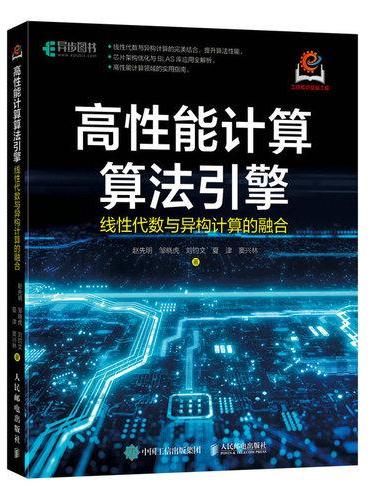
《
高性能计算算法引擎:线性代数与异构计算的融合
》
售價:HK$
109.8

《
对话中的文体:柏拉图与哲学的形成(不理解柏拉图如何写作,就无法真正理解他的哲学)
》
售價:HK$
85.8

《
当疾病来敲门:病人、家属和治疗师是如何一起应对疾病的
》
售價:HK$
109.8

《
新编老老恒言:传承千年的健康智慧(共两册)
》
售價:HK$
85.8

《
建筑的智慧视界
》
售價:HK$
140.8

《
渺小如象
》
售價:HK$
43.8

《
人性的弱点
》
售價:HK$
52.8

《
今日私法理论:德国私法理论的多元视角(德语法学思想译丛)
》
售價:HK$
93.5
|
| 內容簡介: |
|
回顾了过去10年在壁湍流和自由剪切流转捩问题的数值研究中取得的重要进展,介绍了数值方法和模式研究方面的进展,以及由此带来的关于转捩理论认识上的进展。对于壁面流动,文中主要介绍了渐进稳定流动中"跨越bypass转捩"研究中的各种观点。本文也简要介绍了对感受性和转捩控制方面的研究。
|
| 目錄:
|
1 Introduction and General Results
1.1 Introduction
1.2 Nonlinear Disturbance Equations
1.3 Definition of Stability and Critical Reynolds Numbers
1.3.1 Definition of Stability
1.3.2 Critical Reynolds Numbers
1.3.3 Spatial Evolution of Disturbances
1.4 The Reynolds-Orr Equation
1.4.1 Derivation of the Reynolds-Orr Equation
1.4.2 The Need for Linear Growth Mechanisms
Ⅰ Temporal Stability of Parallel Shear Flows
2 Linear Inviscid Analysis
2.1 Inviscid Linear Stability Equations
2.2 Modal Solutions
2.2.1 General Results
2.2.2 Dispersive Effects and Wave Packets
2.3 Initial Value Problem
2.3.1 The Inviscid Initial Value Problem
2.3.2 Laplace Transform Solution
2.3.3 Solutions to the Normal Vorticity Equation
2.3.4 Example: Couette Flow
2.3.5 Localized Disturbances
3 Eigensolutions to the Viscous Problem
3.1 Viscous Linear Stability Equations
3.1.1 The Velocity-Vorticity Formulation
3.1.2 The Orr-Sommerfeld and Squire Equations
3.1.3 Squire''s Transformation and Squire''s Theorem
3.1.4 Vector Modes
3.1.5 Pipe Flow
3.2 Spectra and Eigenfunctions
3.2.1 Discrete Spectrum
3.2.2 Neutral Curves
3.2.3 Continuous Spectrum
3.2.4 Asymptotic Results
3.3 Further Results on Spectra and Eigenfunctions
3.3.1 Adjoint Problem and Bi-Orthogonality Condition
3.3.2 Sensitivity of Eigenvalues
3.3.3 Pseudo-Eigenvalues
3.3.4 Bounds on Eigenvalues
3.3.5 Dispersive Effects and Wave Packets
4 The Viscous Initial Value Problem
4.1 The Viscous Initial Value Problem
4.1.1 Motivation
4.1.2 Derivation of the Disturbance Equations
4.1.3 Disturbance Measure
4.2 The Forced Squire Equation and Transient Growth
4.2.1 Eigenfunction Expansion
4.2.2 Blasius Boundary Layer Flow
4.3 The Complete Solution to the Initial Value Problem
4.3.1 Continuous Formulation
4.3.2 Discrete Formulation
4.4 Optimal Growth
4.4.1 The Matrix Exponential
4.4.2 Maximum Amplification
4.4.3 Optimal Disturbances
4.4.4 Reynolds Number Dependence of Optimal Growth
4.5 Optimal Response and Optimal Growth Rate
4.5.1 The Forced Problem and the Resolvent
4.5.2 Maximum Growth Rate
4.5.3 Response to Stochastic Excitation
4.6 Estimates of Growth
4.6.1 Bounds on Matrix Exponential
……
Ⅱ Stability of Complex Flows and Transition
Ⅲ Appendix
|
| 內容試閱:
|
1.1 Introduction
Hydrodynamic stability theory is concerned with the response of a
laminarflow to a disturbance of small or moderate amplitude. If the flow returns
toits original laminar state one defines the flow as stable, whereas if the
dis-turbance grows and causes the laminar flow to change into a different
state,one defines the flow as unstable. Instabilities often result in turbulent
fluidmotion, but they may also take the flow into a different laminar,
usuallymore complicated state. Stability theory deals with the mathematical
anal-ysis of the evolution of disturbances superposed on a laminar base flow.
Inmany cases one assumes the disturbances to be small so that further
sim-plifications can be justified. In particular, a linear equation governing
theevolution of disturbances is desirable. As the disturbance velocities
growabove a few percent of the base flow, nonlinear effects become importantand
the linear equations no longer accurately predict the disturbance evo-lution.
Although the linear equations have a limited region of validity theyare
important in detecting physical growth mechanisms and identifyingdominant
disturbance types.
In this section we will derive the nonlinear equations governing the
de-velopment of a disturbance on a laminar base flow, define various types
ofstability, and discuss some general concepts and results.
……
|
|

 購物車/收銀台(0) | 在線留言板
| 付款方式
| 運費計算
| 聯絡我們
| 幫助中心 |
加入書簽
購物車/收銀台(0) | 在線留言板
| 付款方式
| 運費計算
| 聯絡我們
| 幫助中心 |
加入書簽 HOME
HOME 新書上架
新書上架 暢銷書架
暢銷書架

